
The first blog post told the story of why we built Project 001. This one is about what it actually took to get there.
The honest answer: more than we thought. On almost every front.
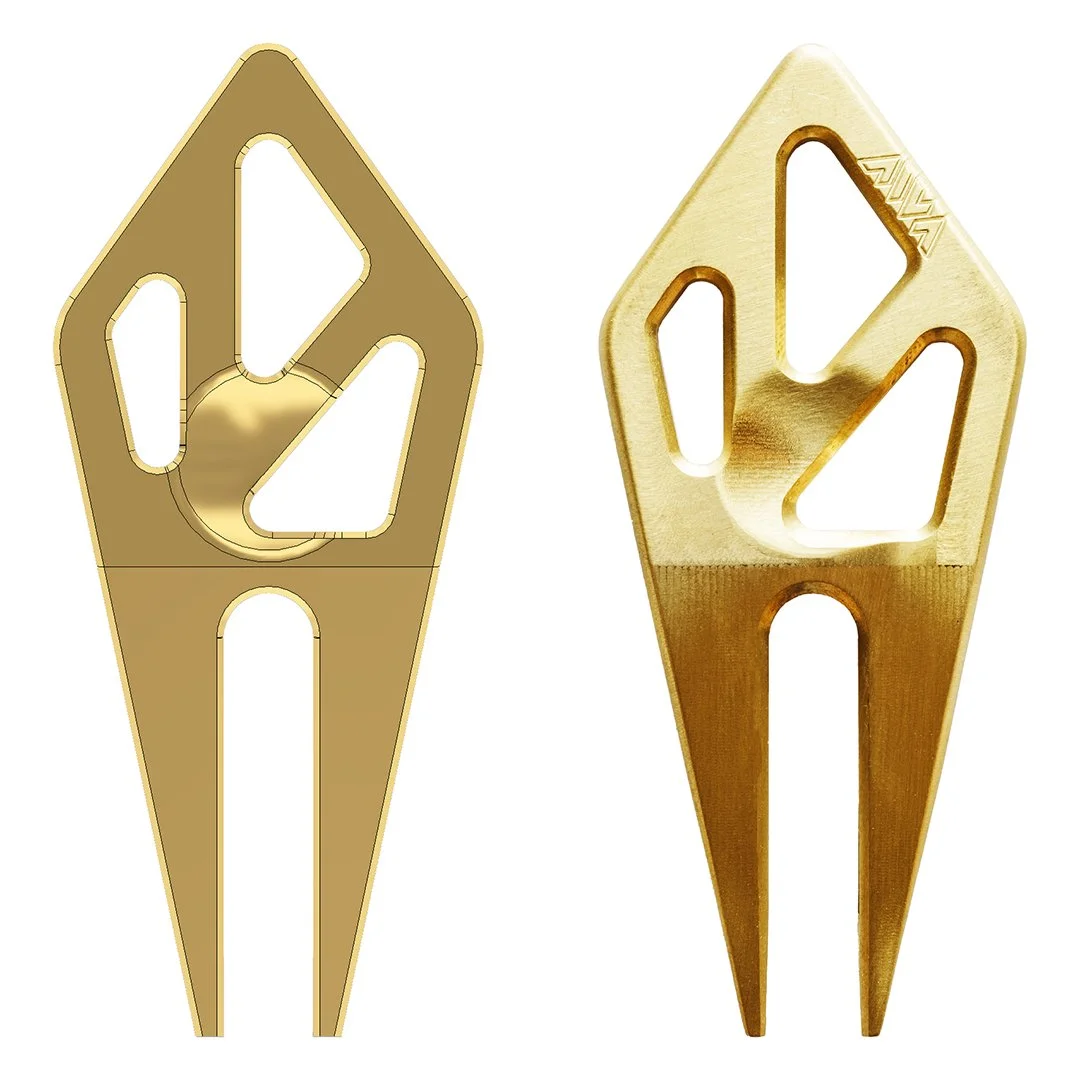
The Original Design, and the Final Production Unit
Production Was Never Going to Be Simple
The design process came together faster than expected. We knew what we wanted — solid brass, clean lines, something that felt serious in your hand. Getting from idea to prototype wasn't the hard part. The hard part was everything that came after.
Stamping a unique number on each piece sounds straightforward until you're three failed attempts deep and realizing that the pressure, the placement, and the die alignment all have to be exactly right or you've just put a crooked "23 of 50" on a part you spent hours making. Same with the logo. Getting it to sit right, look right, and hold up over time took more iterations than either of us want to admit.
Each finished piece represents multiple hours of machine time — and that's before you account for setup, fixturing, quality checks, and hand finishing. When you're running a desktop CNC in a garage and working a full-time job, those hours don't come easy. You find them at night. On weekends. During the stretches when you probably should have been doing something else.
The Machine Itself Was a Project
Here's something we didn't mention in the first post: when we got our CNC machine, it didn't run.
Getting it operational meant sourcing parts for a machine old enough that documentation was sparse and forums were the best resource available. Re-wiring it. Calibrating it from scratch. Learning through trial and error what worked and what didn't, because sometimes the answer simply wasn't out there to find.
It added time. It added frustration. It also forced us to understand the machine at a level we wouldn't have otherwise — which, in the long run, is probably worth something. But in the moment, it was just another thing standing between us and actually making parts.
While Koby Built, Doug Built Something Else
While Koby was resurrecting a CNC machine and figuring out how to hold tolerances on a piece of brass, Doug was building the other half of the company — the website, the brand, the marketing, the infrastructure that turns a cool object into a business someone can actually find and buy from.
Neither of us had done this before. Koby wasn't a production machinist. Doug wasn't a brand strategist. We just did what we could figure out, and kept going.
That division of labor worked. It also meant neither of us had much breathing room.
What We're Taking Into the Next One
If there's a theme to everything above, it's this: time is the constraint. Not creativity, not capability — time. So the biggest thing we're focused on going forward is efficiency. How long does each part actually spend cutting? Where are the bottlenecks? What can be tightened, simplified, or sequenced better so that the hours we do have go further?
We're also being more intentional about protecting time for this. Life doesn't stop. Work doesn't stop. But Virtus Machine Works is something we committed to, and commitments require actually showing up for them — not just when it's convenient, but especially when it isn't.
And then there's the bigger thing, the one that's harder to say out loud: this might not work. We might build the next project and hear nothing. We might be talking into a void for a while. That's a real possibility and we've both made peace with it — because the alternative is not trying, and that feels worse. The idea of never knowing what we could have built is more uncomfortable than the idea of putting something out there and watching it land quietly.
So we'll keep going. We'll make the next thing. We'll get better at this.
That's really all there is to it.
— Doug & Koby, Virtus Machine Works